
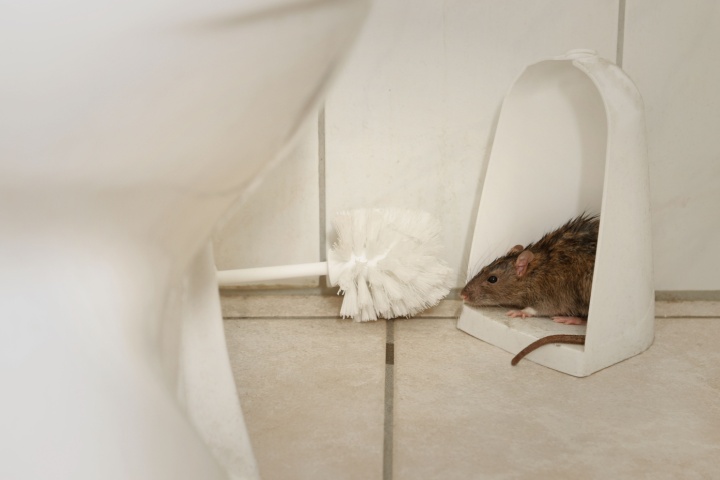
If you have ever heard scratching in the walls on a November night, found droppings behind the dryer in January, or discovered chewed cardboard in the garage during the coldest week of the year, you already know that rodent problems in Menomonee Falls are a cold-weather reality. Mice and rats are not a minor nuisance here—they are one of the most consequential pest issues southeastern Wisconsin homeowners face, and the reasons they are so common during fall and winter come down to basic survival math: when the temperature drops below freezing and stays there for months, your heated home is the best shelter available.
The Wisconsin Winter Equation
Menomonee Falls gets the full Wisconsin winter experience. Sustained temperatures in the teens and single digits. Wind chill well below zero. Heavy snowfall. Frozen ground. These are conditions that rodents cannot survive in long-term without shelter.
House mice, Norway rats, and other rodent species spend the warmer months thriving in fields, wooded edges, landscaped areas, and the spaces under decks and sheds. When fall arrives and overnight temperatures begin dropping into the 30s and 40s—typically in October—rodent behavior shifts. They begin scouting for heated shelter. They detect the warmth escaping from your foundation, garage, and utility penetrations from a surprising distance. And they are remarkably good at finding a way in.
By the time the first hard freeze hits in November or December, the rodents that are going to be your winter problem are already inside. They are not trying to get in during a blizzard. They got in weeks earlier, during the mild fall evenings when you were not thinking about mice.
Why Menomonee Falls Properties Are Especially Vulnerable
Several characteristics common to Menomonee Falls homes make rodent entry easier than many homeowners realize.
- Attached garages: The garage is the single most common rodent entry point in Menomonee Falls homes. The gap beneath the garage door is rarely tight enough to exclude mice—they need an opening the size of a dime. The garage door seal wears unevenly. The concrete apron shifts over time. Side doors have worn weatherstripping. And the interior door between the garage and the living space is typically the least well-sealed door in the house. A mouse that enters the garage has an easy path into the kitchen, the basement, and the wall voids.
- Older construction: Menomonee Falls has a mix of older established homes and newer builds. Older homes have had decades for foundations to settle, mortar to deteriorate, caulk to crack, and utility penetrations to develop gaps. Each of these creates an opening that mice and rats exploit.
- Mature landscaping and wooded edges: Homes near wooded areas, parks, or properties with mature trees and dense vegetation border natural rodent habitat. The closer that habitat is to the home, the shorter the distance rodents need to travel when cold weather triggers the migration indoors.
- Proximity to agricultural and open land: The western edges of Menomonee Falls transition into more rural, agricultural-adjacent land. Field mice that thrive in crops and grassland during summer migrate toward the nearest heated structures when fall harvest removes their cover.
What Rodents Do Once Inside
The consequences go well beyond the unsettling sound of something moving in the walls:
- Contamination: A single mouse produces 50 to 75 droppings per day along every travel path. That contamination accumulates in pantries, drawers, storage areas, attics, and wall voids—creating a health hazard that persists even after the rodents are removed.
- Disease: Mice and rats carry bacteria and parasites and, in some cases, hantavirus. The risk is particularly concerning in areas where rodent droppings become airborne—attic spaces, garages, and storage areas where disturbance kicks particles into the air.
- Damage: Rodents gnaw constantly. Wiring, insulation, plumbing, stored items, and structural wood are all targets. Chewed wiring is a documented fire hazard. Damaged insulation reduces heating efficiency—adding insult to injury during a Wisconsin winter.
- Reproduction: A pair of house mice in a warm, sheltered home with access to food can produce six to ten litters per year. A small problem in October is a significant infestation by February if it is not addressed.
Why Fall Prevention Is the Key
The window to prevent winter rodent problems is September through early November—before the rodents get in. Professional rodent control during this window includes inspection of the entire structure for active and potential entry points, trapping to remove any rodents already present, exclusion work to seal entry points with rodent-proof materials, and exterior monitoring to reduce the population pressuring the home.
Once rodents are established inside the walls in mid-winter, the process becomes more complex, more time-consuming, and more expensive. The homeowners who avoid winter rodent problems are the ones who invested in fall prevention.
Nexus Pest Solutions has close to 30 years of experience managing rodent problems across southeastern Wisconsin. The company’s approach combines trapping, exclusion, and monitoring—not just setting a few snap traps and hoping for the best. The FREE 58-Point Pest Analysis identifies every vulnerability on the property, and the treatment plan addresses how rodents are getting in, not just the ones that are already there.
If rodents have become a fall and winter problem in your Menomonee Falls home—or if you want to prevent them before the next cold season—contact Nexus Pest Solutions for a free consultation.