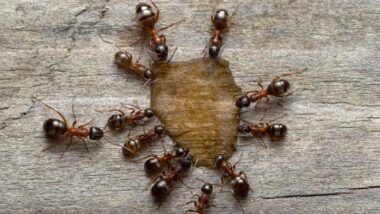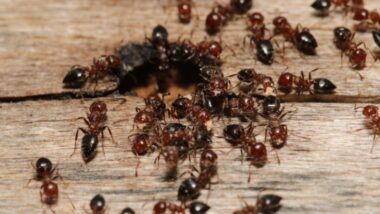

If ants keep showing up in your Menomonee Falls home—despite keeping the kitchen clean, taking out the trash, and wiping down every surface—the problem is not housekeeping. Ants are responding to conditions on and around your property that have nothing to do with how often you mop the floor. Understanding what actually attracts them is the first step toward reducing the activity and making professional ant control even more effective.
The Three Things Ants Are After
Every ant trail in your home traces back to one or more of these attractants: moisture, food, and shelter. In Menomonee Falls, the relative importance of each shifts with the seasons.
- Moisture—the primary driver for most of the year: Ants need water to survive, and the plumbing inside your home provides a reliable source. Kitchen sinks, bathroom faucets, dishwasher connections, condensation on cold water pipes, pet water bowls, and even the moisture that accumulates under potted plants all attract foraging ants. During Wisconsin’s humid summer months, moisture is abundant outdoors, but during spring and fall transitions and particularly during dry spells, the water sources inside your home become the main draw.
- Food—the obvious one: Ants are opportunistic and will exploit any accessible food source: sugar, honey, syrup, crumbs on counters, grease residue near stoves, fruit left on the counter, pet food in bowls, and open or improperly sealed packaging in the pantry. Even microscopic residue can sustain a foraging trail. The pheromone signal a scout leaves behind is durable—it can guide hundreds of workers to the same spot for days after the original food source is gone.
- Shelter—especially as seasons transition: As temperatures drop in fall and winter approaches, the warm, dry interior of a heated Menomonee Falls home becomes attractive to ant colonies seeking protection from the cold. Carpenter ants establish satellite colonies inside wall voids and structural wood. Other species shift nesting activity toward the foundation and the heated spaces adjacent to it. Your home is not just a food and water source—it is a refuge.
Property Conditions That Increase Ant Attraction
Beyond the food, water, and shelter equation, specific conditions around your property determine how close ant colonies establish to your home—and the closer they are, the more persistent the indoor activity.
- Mulch and landscaping against the foundation: Mulch retains moisture at the soil surface and provides the damp, sheltered conditions that ant colonies nest in. Planting beds tight against the house put nesting habitat within inches of your entry points. The deeper and wetter the mulch, the more attractive it is.
- Concrete and hardscaping: Pavement ants nest under driveways, walkways, patios, and concrete slabs. The warmth that concrete retains during the day and the shelter it provides from rain make the underside of hardscaping ideal nesting territory. Expansion joints and cracks in concrete provide direct pathways from the nest into the home.
- Moisture-damaged wood: Carpenter ants target wood that has been softened by moisture. In Menomonee Falls, where rain, snow, ice, and freeze-thaw cycles expose homes to moisture throughout the year, the potential for moisture-damaged wood is significant. Deck boards, porch framing, window trim, fascia, and any wood with prolonged moisture contact can become carpenter ant habitat.
- Tree branches and shrubs contacting the home: Ants travel along branches and vegetation that touch the house, gaining access to upper levels—windows, soffits, and roofline areas—that homeowners do not think to inspect or seal.
- Poor drainage: Water that pools near the foundation, downspouts that discharge against the house, and grading that slopes toward the home rather than away from it all saturate the soil where ant colonies nest. Better drainage means drier soil, which means fewer colonies close to the foundation.
- Exterior lighting: While ants are not directly attracted to light, the insects that light draws—moths, beetles, and other flying prey—create a food-rich zone near entry points. That insect concentration indirectly supports the spider and ant populations near the home.
What Actually Reduces Ant Attractants
The combination of property management and professional treatment delivers the strongest results:
- Pull mulch back at least 12 inches from the foundation and keep it shallow
- Fix leaky faucets, hose bibs, and irrigation connections
- Correct drainage so water flows away from the home
- Trim vegetation and tree branches so nothing contacts the exterior
- Seal cracks in concrete, expansion joints, and gaps around utility penetrations
- Store food in sealed containers and clean up residue promptly
- Address moisture-damaged wood promptly—especially if carpenter ants are a concern
Professional pest control adds the barrier treatment, non-repellent colony-elimination products, and recurring service that property management alone cannot provide. Nexus Pest Solutions starts every treatment plan with a thorough analysis that identifies exactly which attractants are present on your property and what needs to change—not just what needs to be sprayed.
If ants keep finding their way into your Menomonee Falls home despite your best efforts, contact Nexus Pest Solutions for a free consultation and find out what is drawing them in.