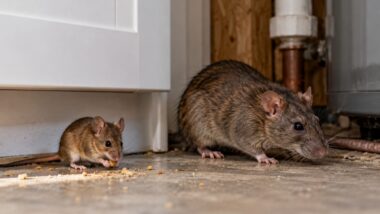
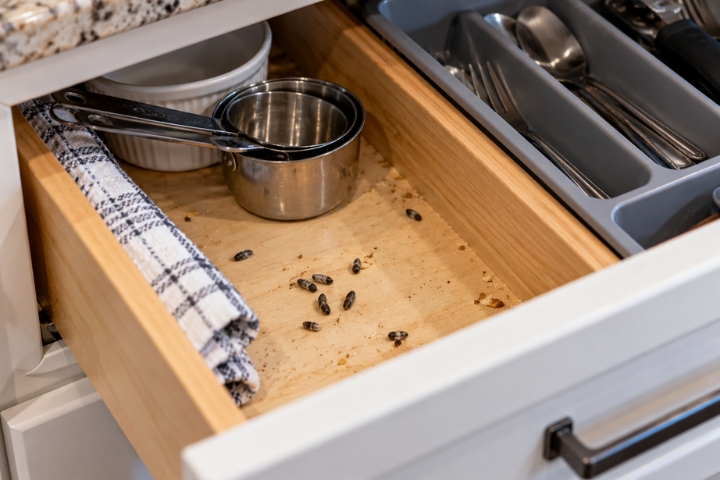
Finding small droppings in a kitchen drawer or basement storage area calls for two jobs: safe cleanup and determining whether mice are still present. Start by keeping children and pets away and leaving the material undisturbed while you assess the affected area. At Nexus Pest Solutions, our rodent control services can help you investigate suspected mice in your Menomonee Falls home and address their access. Cleanup removes contamination, while an inspection helps determine why it appeared and what needs to happen to prevent repeated deposits.
Pause Before Emptying the Drawer or Moving Boxes
Take note of the location before cleaning. Small, dark pellets can be consistent with mouse droppings, but appearance alone can leave room for uncertainty. A photograph taken without touching the material can help us understand what you found. Include the surrounding cabinet or storage area so you can explain where the pellets were concentrated.
Avoid shaking out liners, brushing droppings onto the floor, or carrying affected belongings through the house. Those actions can scatter material beyond the original area. Close the room or restrict access where practical, and separate nearby food you need to assess. If a package is chewed or visibly contaminated, discard the food rather than transferring it to a clean container.
Consider whether the space was recently used. Droppings in a drawer you open daily suggest a different timeline from droppings behind boxes stored for several years. Tell us when you last knew the area was clean. That information can help distinguish a newly discovered deposit from confirmed ongoing mouse presence.
Use Wet Cleanup for a Small, Accessible Area
For a limited amount of rodent waste on an accessible hard surface, use precautions that keep the material wet during removal. Dry sweeping and vacuuming can release contaminated dust. If you are unsure whether you can handle the cleanup safely, leave the area alone and ask for guidance first.
Prepare the space and supplies before beginning:
- Ventilate the area for 30 minutes by opening doors and windows where safe, and leave while it airs out.
- Wear rubber or plastic gloves. Saturate droppings and urine with an appropriate disinfectant.
- Allow at least five minutes, or the contact time directed on the product label, before wiping up with paper towels.
- Put used towels in a covered garbage container, then disinfect the affected hard surfaces.
- Wash your gloved hands before removing gloves, and wash your bare hands afterward.
Follow the disinfectant label for the surface, application, ventilation, and required contact time. Keep children and pets away during use, and never mix cleaning products. Food-contact surfaces may require an additional rinse specified by the label. Prepare enough clean supplies that you can finish without repeatedly touching cabinet handles or other household items with dirty gloves.
Recognize When Cleanup Requires Additional Help
Extensive droppings, multiple nests, contaminated insulation, or material inside an inaccessible wall are reasons to get professional advice before disturbing anything. A few pellets on a washable shelf and widespread contamination in an attic involve different conditions. The location and affected materials influence what protective equipment and cleanup approach are appropriate.
Soft or porous belongings also need individual assessment. A cardboard box with droppings inside can conceal contamination among its contents, and a quick wipe of the outside will leave that material in place. Avoid sorting a heavily contaminated box at the kitchen table. Ask how to handle the specific items before deciding what can be cleaned and what should be discarded.
When you contact us, describe both the suspected mice and the cleanup concern. We provide rodent control; ask about the separate cleanup arrangements your situation requires. You should have a clear understanding of who will handle removal of contaminated material, especially when insulation or building components are involved.
Check Whether Droppings Return After Safe Removal
Once the affected area has been cleaned appropriately, record the date and where you checked. Look again without disturbing any new material. Fresh deposits appearing in a previously clean location suggest that a rodent is still using that space, which is useful information for the inspection and control plan.
Keep the comparison specific. A clean kitchen drawer tells you about that drawer; mice may also use the basement, garage, or spaces behind appliances. Mention any sounds, chewed packaging, or sightings in other rooms. We can consider those findings together instead of relying on the amount you found in one cabinet.
You may discover droppings when retrieving winter clothing or holiday decorations in November. In Menomonee Falls, that seasonal change can bring you into storage areas that have gone unchecked. The discovery date identifies when you noticed the problem, while inspection and subsequent monitoring help determine whether rodents are currently there.
Address the Cause Alongside the Contamination
Keep replacement food and pet supplies in sturdy containers with tight lids, and clean up accessible spills. Organize storage so you can see lower shelves and wall edges. These changes help you notice new deposits and reduce resources available to mice while the rodent problem is addressed.
We can investigate possible access points and discuss removal and exclusion. Closing an opening needs to account for animals that may already be inside, as well as any ventilation or drainage the opening serves. The goal is to address the rodent’s route without confining it inside a wall or interfering with your home’s systems.
If you have found suspected mouse droppings, contact us about an inspection in your Menomonee Falls home. Tell us where the material appeared, how much you found, and whether it returned after safe cleanup. We can help determine the next steps for the mice while you arrange appropriate care for contaminated areas.