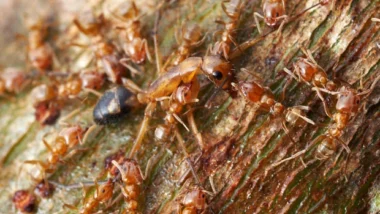
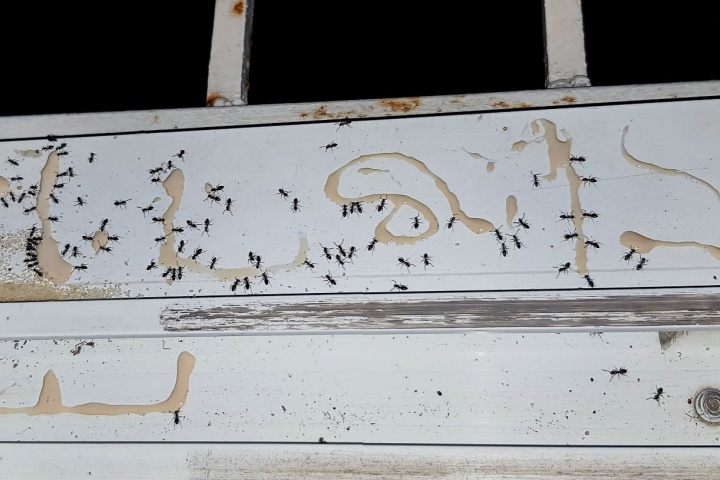
If ants have appeared in your Germantown home—trailing across the kitchen counter, lining up along the bathroom baseboard, clustered near the dog’s water bowl—and you are wondering why it is happening now, the answer is almost always tied to something that just changed outside. A temperature shift. A rainstorm. The ground thawing after a long winter. A colony entering its expansion phase. Ants do not invade homes on a whim. They respond to environmental triggers, and in southeastern Wisconsin, those triggers follow a rhythm that makes ant activity predictable—if you know what to look for.
Spring Triggers—March Through May
If you are reading this in spring, you are in the middle of the most common trigger period. As soil temperatures rise above 50°F—which in Germantown typically happens in late March or April—ant colonies that spent the winter dormant or semi-dormant underground shift into expansion mode. Worker production increases. Foraging range extends. Scouts begin exploring farther from the nest, and the foundations of Germantown homes are right there in their path.
Spring rain compounds the effect. Heavy rainfall saturates the soil and floods shallow ant tunnels. Colonies evacuate to higher, drier ground—and when the nest is adjacent to your foundation, the closest dry shelter is your home. The overnight ant trail that appeared from nowhere after a spring thunderstorm is one of the most common pest encounters Germantown homeowners report.
Carpenter ant swarmers add another layer in April and May. These large, winged reproductives emerge from mature colonies on warm days, often appearing inside the home near windows and light sources. Finding winged carpenter ants indoors means a colony has been present—possibly inside the structure’s wood—for years. This is not a situation to address with a consumer spray. It warrants professional inspection.
Summer Triggers—June Through August
Summer ant activity in Germantown is driven primarily by colony size and resource competition. Colonies that started expanding in spring are now at their largest. Foraging is at its most aggressive. Trails are heaviest and most persistent.
Southeastern Wisconsin’s humid summers also create moisture conditions both inside and outside the home that attract ant species. Condensation on cold water pipes, dripping A/C units, moisture under sinks, and the humidity that accumulates in basements and lower levels all draw foraging ants that are seeking water as much as food.
Pavement ants are particularly active during summer, pushing visible soil mounds through cracks in driveways, walkways, and patios. Odorous house ants maintain persistent indoor trails, particularly in kitchens and bathrooms. Carpenter ants forage heavily—often at night—and homeowners who check the kitchen after dark may encounter large, dark ants moving along counters, floors, and window frames.
Fall Triggers—September Through October
Ant activity often spikes briefly in early fall as colonies prepare for winter. Foragers become more aggressive about securing food before cold weather shuts down outdoor activity. Some species also begin shifting their nesting behavior, moving deeper into soil or toward the heated spaces near foundations and under slabs.
Carpenter ants that have established satellite colonies inside the home may increase their activity in fall as the parent colony outside begins to slow down and the heated interior becomes the primary base of operations.
Winter—The Quiet Exception
Wisconsin’s harsh winters do shut down most outdoor ant activity. Colonies in the soil go dormant. Foraging stops. Trails disappear.
But carpenter ant satellite colonies inside heated wall voids and structural wood can remain active year-round. If you are seeing large, dark ants inside the home in December, January, or February, that is a significant indicator that a colony has established inside the structure—not in the soil outside. Winter carpenter ant sightings should be investigated by a professional.
Why They Chose Your Home
The environmental trigger explains the timing. The conditions on your property explain why the ants came to your house specifically rather than the one next door:
- Mulch beds and landscaping tight against the foundation provide moist nesting habitat inches from entry points
- Cracks in the driveway, walkway, and foundation give pavement ants direct underground access to the interior
- Moisture-damaged wood—from ice dams, roof leaks, plumbing issues, or aging exterior trim—attracts carpenter ants
- Tree branches and shrubs touching the home give ants pathways to upper-level entry points
- Standing water, leaky hose bibs, and poor drainage keep the soil around the foundation saturated—supporting more colonies closer to the house
Breaking the Pattern
If ants show up at the same time every year in the same areas of your home, the colony is close by, the entry points are established, and the attractants are unchanged. Wiping away the trail addresses the symptom for a day. Breaking the pattern requires colony-level treatment with non-repellent products, barrier application that is maintained through the active season, and attention to the property conditions that keep inviting ants back.
Nexus Pest Solutions starts with a thorough analysis of the property to identify which ant species is present, where the colony is established, how ants are entering, and what conditions are sustaining the activity. That diagnostic depth is what makes the difference between temporary suppression and lasting elimination.
If ants have shown up in your Germantown home and you want them gone for good—not just for the afternoon—contact Nexus Pest Solutions for a free consultation.